GIMME: Gamifying
Human Movement
Interaction Design • Jul 2026 • 5 min read
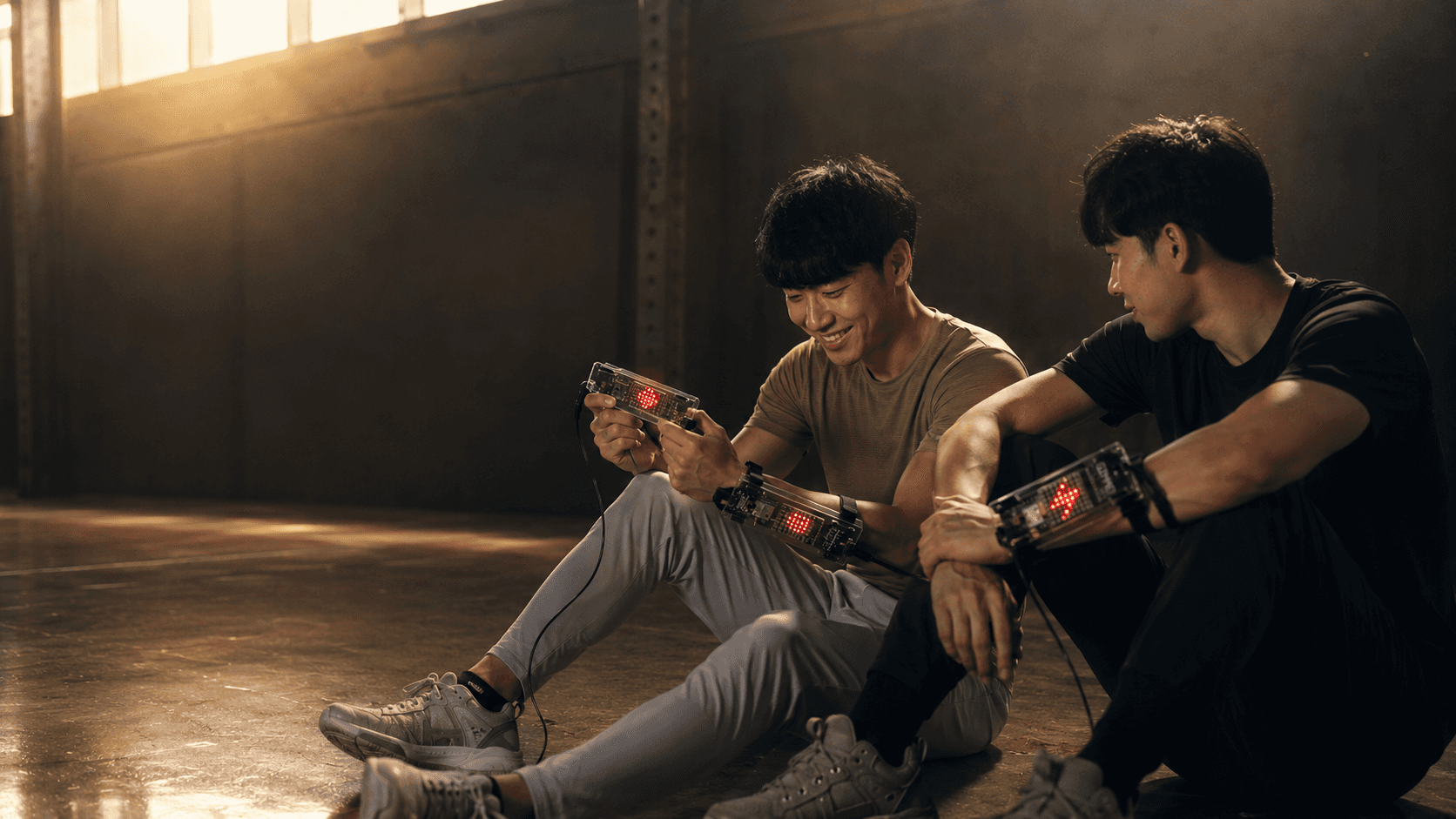
As everyday life becomes increasingly sedentary, staying active can often feel like a chore. GIMME explores a different approach—using interactive technology and friendly competition to transform movement into a playful, social experience.

01 —
Learning from Play
Rather than looking at traditional fitness equipment, the project began by studying games that successfully motivate people to move. Titles such as Wii Sports and Ring Fit Adventure demonstrate how competition, immediate feedback, and simple mechanics can transform exercise into an engaging experience.
Instead of asking players to work harder, these games encourage movement by making the activity itself enjoyable.
02 —
Designing the Interaction
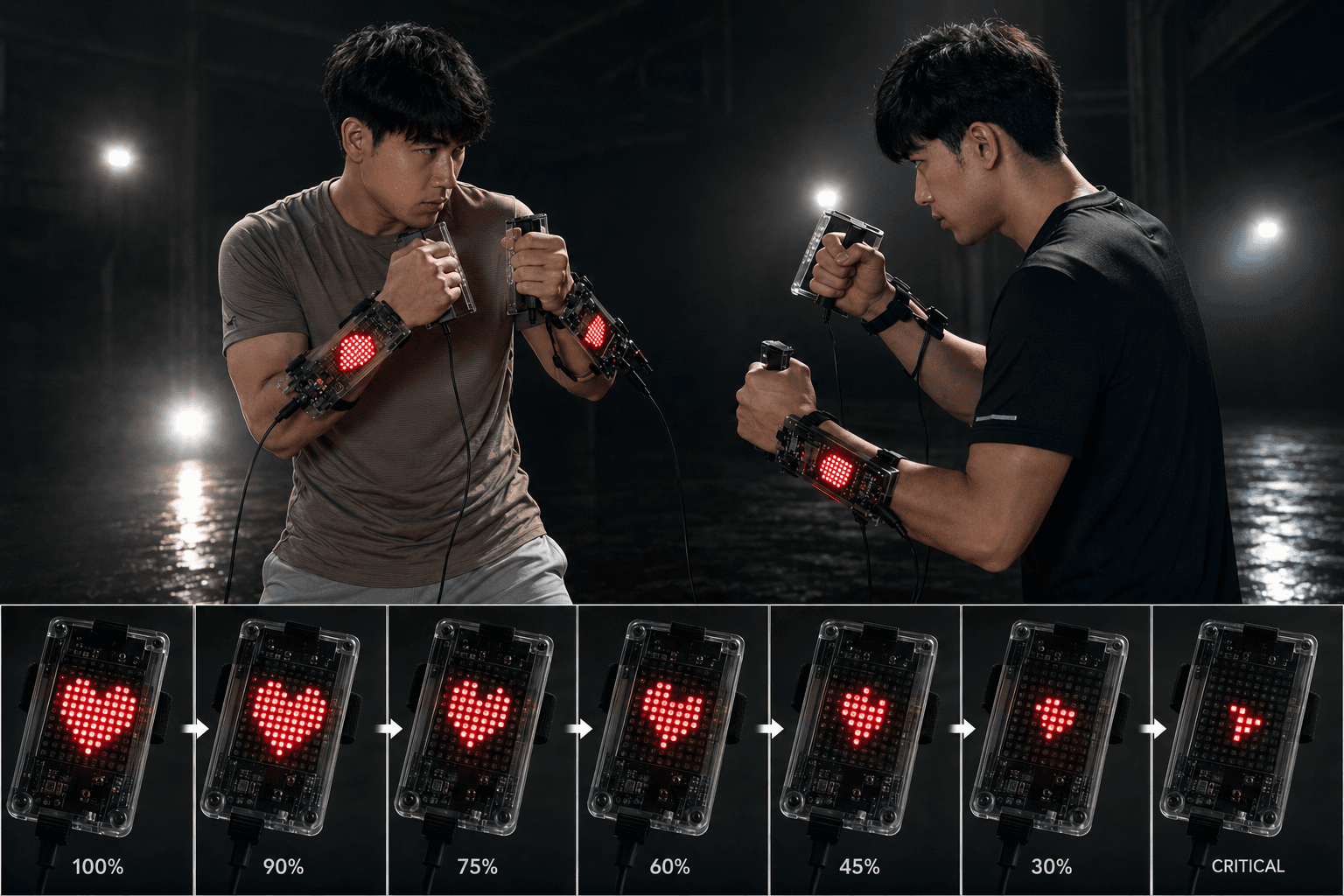
Every interaction was designed around a simple gameplay loop. Players perform punches while wearable sensors detect movement in real time. Each successful hit is translated into visual feedback, allowing both participants to react instantly and maintain the rhythm of the game.
The goal wasn't to simulate professional boxing, but to create an accessible interaction that rewards movement rather than technical skill.
03 —
From Movement to Feedback
From Literal to Minimal
The prototype combines motion sensing, Arduino processing, Bluetooth communication, and LED feedback into a single wearable system. Rather than acting as separate technologies, these components work together to transform physical actions into a responsive game experience.
The result is a lightweight interaction where movement becomes the primary interface.
04 —
Refinding the Prototype
Like many interaction design projects, the prototype evolved through continuous testing and refinement. Multiple iterations explored ergonomics, component placement, sensor reliability, and user comfort before arriving at the final wearable form.
Each prototype improved not only the hardware, but also the overall play experience.
05 —
Making Technology Invisible
While the project relies on embedded electronics and custom Arduino programming, the technology was never intended to become the focus of the experience. Motion detection, Bluetooth synchronization, and visual feedback operate quietly in the background, allowing players to concentrate on movement rather than the device itself.
Good interaction design often succeeds when the technology becomes almost invisible.
06 —
Beyond the Prototype
Future iterations could replace the wired prototype with lightweight wireless wearables, improve punch recognition through machine learning, and introduce online multiplayer experiences. More importantly, the project raises broader questions about how interactive technology might encourage healthier everyday habits through play rather than obligation.
Looking Back
GIMME demonstrates how simple physical interactions can transform everyday exercise into playful social experiences.
Team
3 members
Role
Industrial Designer & Interaction Designer
Responsibilities
Research & Concept Development
Interaction Design
Industrial Design
Prototyping
Physical Computing
User Testing
Visual Communication
01 —
Learning from Play
Rather than looking at traditional fitness equipment, the project began by studying games that successfully motivate people to move. Titles such as Wii Sports and Ring Fit Adventure demonstrate how competition, immediate feedback, and simple mechanics can transform exercise into an engaging experience.
Instead of asking players to work harder, these games encourage movement by making the activity itself enjoyable.
02 —
Designing the Interaction
Every interaction was designed around a simple gameplay loop. Players perform punches while wearable sensors detect movement in real time. Each successful hit is translated into visual feedback, allowing both participants to react instantly and maintain the rhythm of the game.
The goal wasn't to simulate professional boxing, but to create an accessible interaction that rewards movement rather than technical skill.
03 —
From Movement to Feedback
From Literal to Minimal
The prototype combines motion sensing, Arduino processing, Bluetooth communication, and LED feedback into a single wearable system. Rather than acting as separate technologies, these components work together to transform physical actions into a responsive game experience.
The result is a lightweight interaction where movement becomes the primary interface.
04 —
Refinding the Prototype
Like many interaction design projects, the prototype evolved through continuous testing and refinement. Multiple iterations explored ergonomics, component placement, sensor reliability, and user comfort before arriving at the final wearable form.
Each prototype improved not only the hardware, but also the overall play experience.
05 —
Making Technology Invisible
While the project relies on embedded electronics and custom Arduino programming, the technology was never intended to become the focus of the experience. Motion detection, Bluetooth synchronization, and visual feedback operate quietly in the background, allowing players to concentrate on movement rather than the device itself.
Good interaction design often succeeds when the technology becomes almost invisible.
06 —
Beyond the Prototype
Future iterations could replace the wired prototype with lightweight wireless wearables, improve punch recognition through machine learning, and introduce online multiplayer experiences. More importantly, the project raises broader questions about how interactive technology might encourage healthier everyday habits through play rather than obligation.
Looking Back
GIMME demonstrates how simple physical interactions can transform everyday exercise into playful social experiences.
Team
3 members
Role
Industrial Designer & Interaction Designer
Responsibilities
Research & Concept Development
Interaction Design
Industrial Design
Prototyping
Physical Computing
User Testing
Visual Communication
01 —
Learning from Play
Rather than looking at traditional fitness equipment, the project began by studying games that successfully motivate people to move. Titles such as Wii Sports and Ring Fit Adventure demonstrate how competition, immediate feedback, and simple mechanics can transform exercise into an engaging experience.
Instead of asking players to work harder, these games encourage movement by making the activity itself enjoyable.
02 —
Designing the Interaction
Every interaction was designed around a simple gameplay loop. Players perform punches while wearable sensors detect movement in real time. Each successful hit is translated into visual feedback, allowing both participants to react instantly and maintain the rhythm of the game.
The goal wasn't to simulate professional boxing, but to create an accessible interaction that rewards movement rather than technical skill.
03 —
From Movement to Feedback
From Literal to Minimal
The prototype combines motion sensing, Arduino processing, Bluetooth communication, and LED feedback into a single wearable system. Rather than acting as separate technologies, these components work together to transform physical actions into a responsive game experience.
The result is a lightweight interaction where movement becomes the primary interface.
04 —
Refinding the Prototype
Like many interaction design projects, the prototype evolved through continuous testing and refinement. Multiple iterations explored ergonomics, component placement, sensor reliability, and user comfort before arriving at the final wearable form.
Each prototype improved not only the hardware, but also the overall play experience.
05 —
Making Technology Invisible
While the project relies on embedded electronics and custom Arduino programming, the technology was never intended to become the focus of the experience. Motion detection, Bluetooth synchronization, and visual feedback operate quietly in the background, allowing players to concentrate on movement rather than the device itself.
Good interaction design often succeeds when the technology becomes almost invisible.
06 —
Beyond the Prototype
Future iterations could replace the wired prototype with lightweight wireless wearables, improve punch recognition through machine learning, and introduce online multiplayer experiences. More importantly, the project raises broader questions about how interactive technology might encourage healthier everyday habits through play rather than obligation.
Looking Back
GIMME demonstrates how simple physical interactions can transform everyday exercise into playful social experiences.
Team
3 members
Role
Industrial Designer & Interaction Designer
Responsibilities
Research & Concept Development
Interaction Design
Industrial Design
Prototyping
Physical Computing
User Testing
Visual Communication