Resonance: Designing Through Light, Water and Atmosphere
Sensory Design · Jul 2026 · 5 min read
What if architecture was designed to be experienced, not just seen? This exploration investigates how light, sound, and touch can shape the way we perceive and inhabit space.

01 —
Designing with the Senses
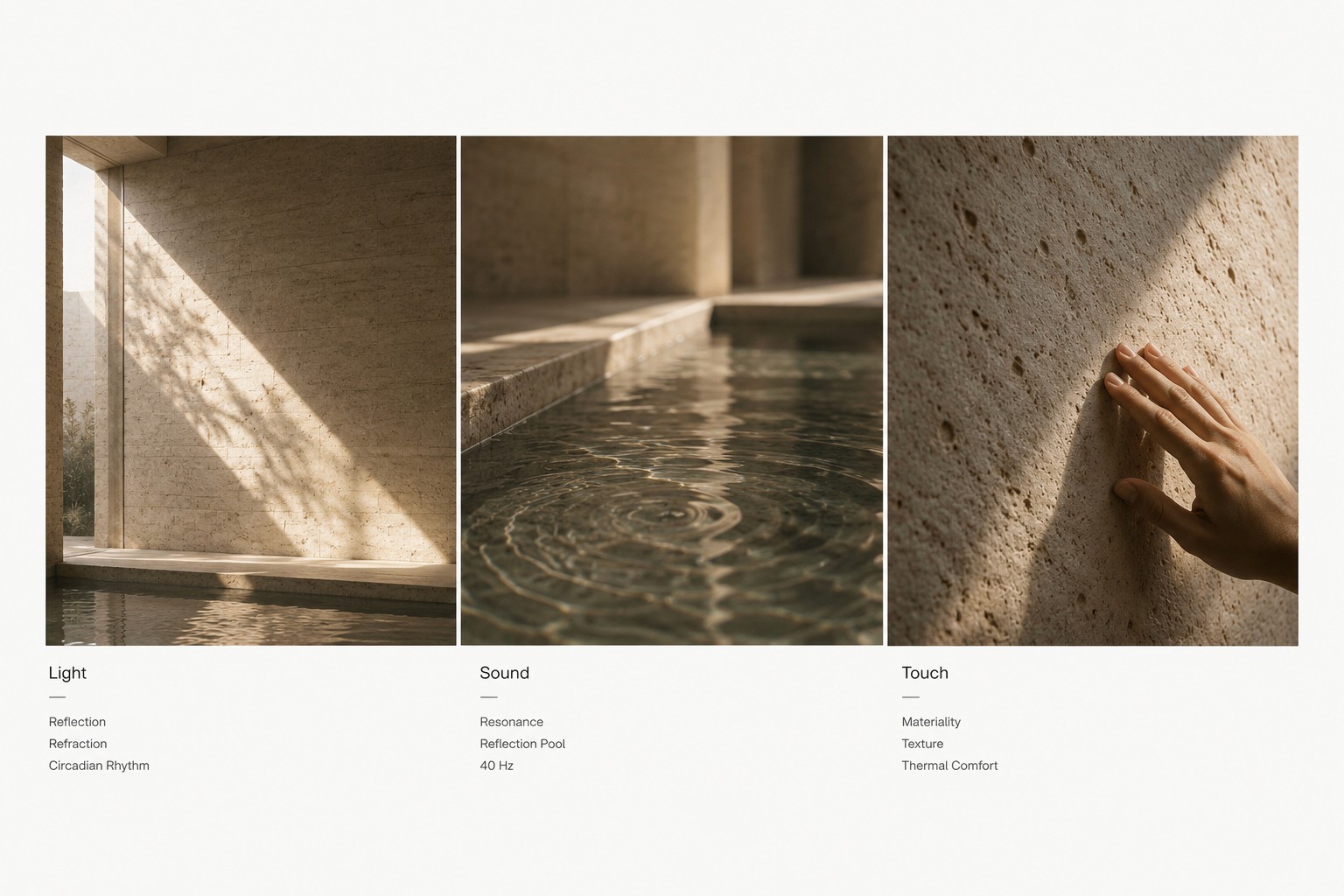
Every space communicates beyond vision. Before designing a final environment, I explored how individual senses influence the way people experience architecture.
02 —
Bringing the Senses Together
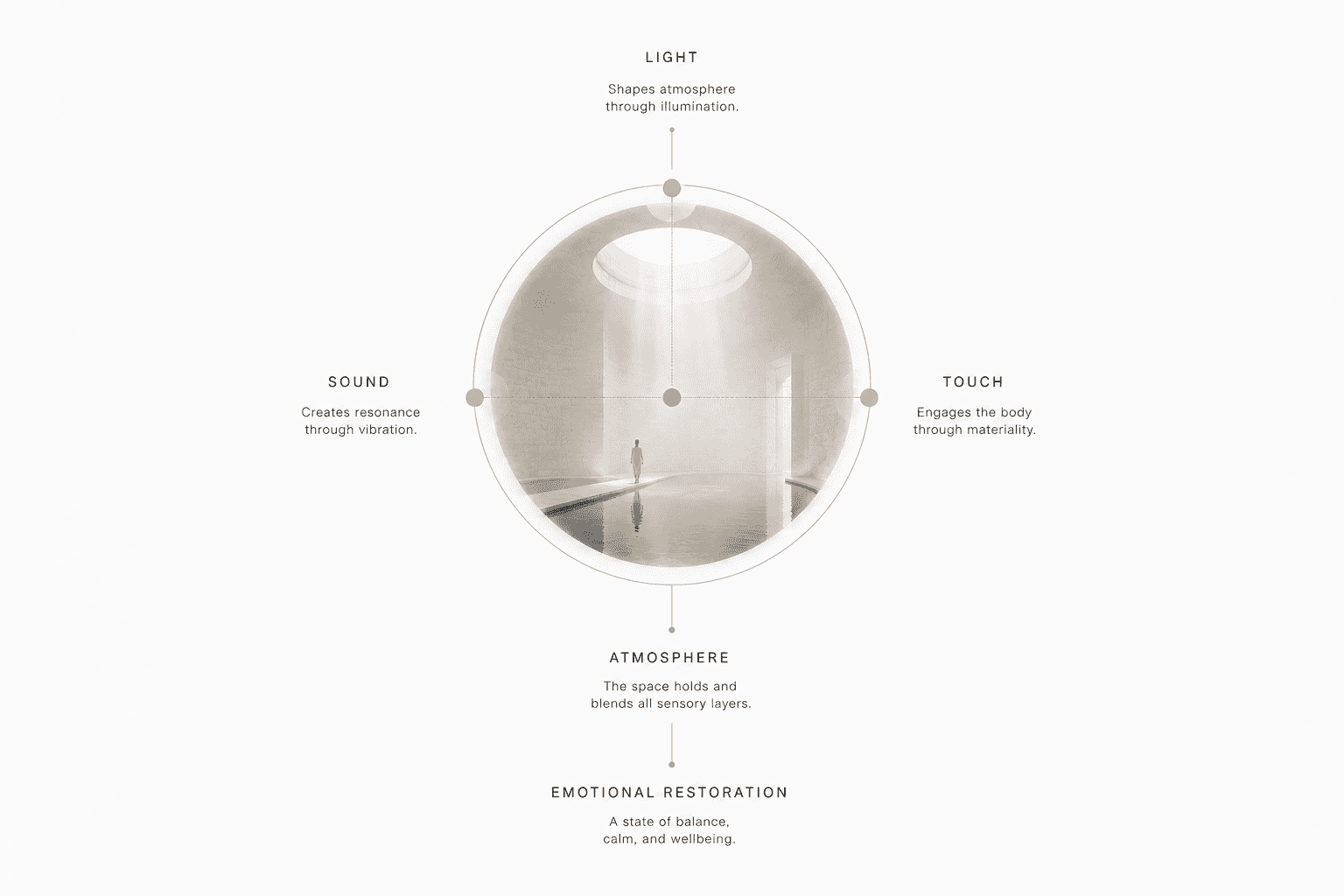
Rather than treating each sense independently, the next challenge was combining them into one continuous architectural experience.
03 —
The Pavilion
Resonance is a multisensory pavilion composed of two contrasting environments. Visitors move through changing conditions of light, sound, and touch, allowing the architecture itself to influence perception.
04—
Designing Human Perception
Architecture isn't only experienced visually. Every material, sound, and shift in light quietly shapes how we move, pause, and feel within a space.
05 —
Looking Back
Designing with the senses changed the way I approach architecture—not as objects to be seen, but as experiences to be felt.
06 —
Reflection
Designing this pavilion shifted my focus from creating spaces that people simply use to creating spaces that people can feel. Rather than treating architecture as an object, the project became an exploration of how light, material, water and atmosphere can quietly shape emotion and perception.
01 —
Designing with the Senses
Every space communicates beyond vision. Before designing a final environment, I explored how individual senses influence the way people experience architecture.
02 —
Bringing the Senses Together
Rather than treating each sense independently, the next challenge was combining them into one continuous architectural experience.
03 —
The Pavilion
Resonance is a multisensory pavilion composed of two contrasting environments. Visitors move through changing conditions of light, sound, and touch, allowing the architecture itself to influence perception.
04—
Designing Human Perception
Architecture isn't only experienced visually. Every material, sound, and shift in light quietly shapes how we move, pause, and feel within a space.
05 —
Looking Back
Designing with the senses changed the way I approach architecture—not as objects to be seen, but as experiences to be felt.
06 —
Reflection
Designing this pavilion shifted my focus from creating spaces that people simply use to creating spaces that people can feel. Rather than treating architecture as an object, the project became an exploration of how light, material, water and atmosphere can quietly shape emotion and perception.
01 —
Designing with the Senses
Every space communicates beyond vision. Before designing a final environment, I explored how individual senses influence the way people experience architecture.
02 —
Bringing the Senses Together
Rather than treating each sense independently, the next challenge was combining them into one continuous architectural experience.
03 —
The Pavilion
Resonance is a multisensory pavilion composed of two contrasting environments. Visitors move through changing conditions of light, sound, and touch, allowing the architecture itself to influence perception.
04—
Designing Human Perception
Architecture isn't only experienced visually. Every material, sound, and shift in light quietly shapes how we move, pause, and feel within a space.
05 —
Looking Back
Designing with the senses changed the way I approach architecture—not as objects to be seen, but as experiences to be felt.
06 —
Reflection
Designing this pavilion shifted my focus from creating spaces that people simply use to creating spaces that people can feel. Rather than treating architecture as an object, the project became an exploration of how light, material, water and atmosphere can quietly shape emotion and perception.